
Taking the next step in cancer treatment.
OutMARCHing cancer by removing disease-driving surface proteins
OutMARCH is developing a new MARCH-based class of SureTACs: bispecific antibody degraders designed to guide selected cancer-driving proteins from the cell surface into the cell’s own lysosomal degradation pathway.
By combining antibody discovery, protein engineering, AI-guided design and E3-target pairing technologies, the project aims to open new therapeutic opportunities for difficult-to-treat cancers.
Many cancers depend on proteins at the cell surface. These proteins help cancer cells grow, communicate, evade immune responses and resist treatment. Existing therapies often try to block these proteins, but blocking is not always enough, especially when signalling depends on complex protein assemblies or when cancer cells adapt over time.
The OutMARCH approach
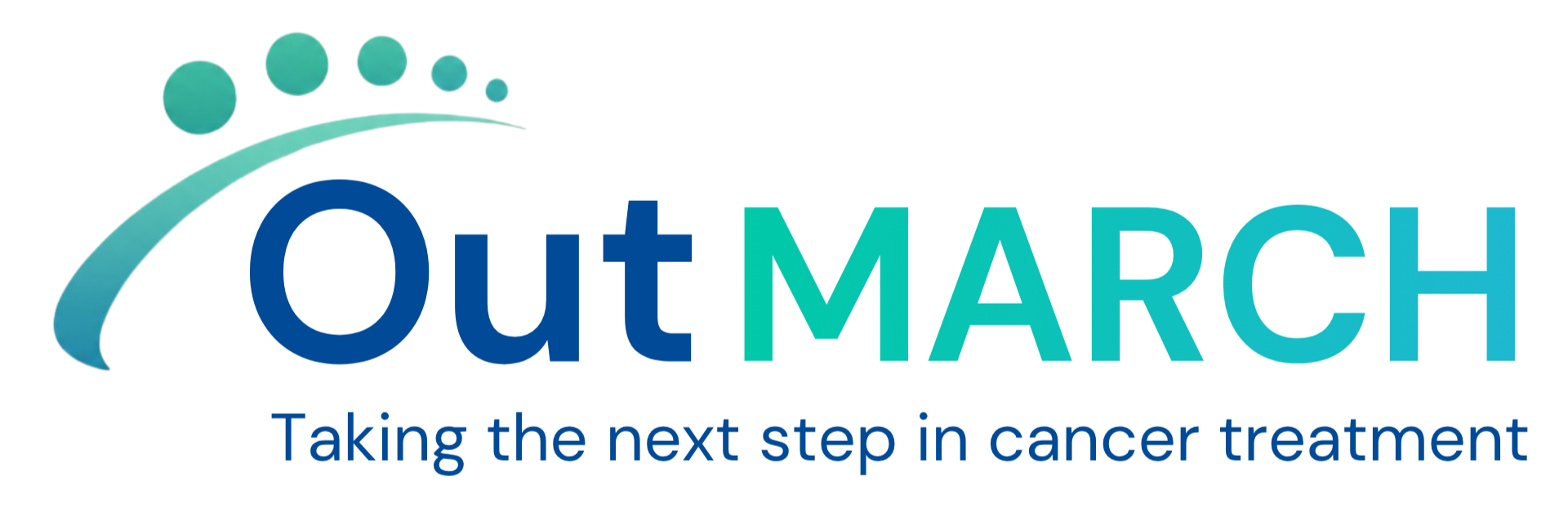
OutMARCH explores a different strategy: removing disease-driving surface proteins rather than only inhibiting them. The project uses SureTACs, bispecific antibody-based degraders that bring a selected target protein close to a membrane-bound E3 ligase. This can trigger internalisation of the target and direct it towards lysosomal degradation.
What makes OutMARCH distinctive is its focus on the MARCH family of membrane-bound E3 ligases. These proteins are central to the project’s name and scientific concept. By developing binders that can engage MARCH proteins, OutMARCH aims to create a modular platform for selective membrane protein degradation in cancer.
Why this matters
Cell-surface proteins are important targets for new cancer treatments, because they help cancer cells receive and send signals. However, many of these proteins are difficult to treat with conventional drugs. Some do not have an obvious “pocket” where a drug can bind, while others work as part of larger signalling complexes that are hard to shut down by blocking one site alone.
OutMARCH explores whether MARCH-based SureTACs can remove these disease-driving proteins from the cell surface in a more selective and lasting way. The project first focuses on therapy-resistant B-cell lymphomas and difficult-to-treat gastrointestinal cancers, where abnormal cell-surface signalling plays an important role in cancer progression and treatment resistance.
OutMARCH brings together expertise in cancer biology, antibody discovery, AI-guided protein design, nanobody technology, clinical cancer models and early therapeutic development. Together, the consortium is building and testing a new platform that could ultimately be applied beyond cancer, including diseases driven by abnormal cell-surface signalling.
Interdisciplinary by design
News
30.06.2026
Website live!
12.02.2026
Interview with Madelon Maurice and Maureen Spit by Oncode Institute.
09.02.2026
News item on UMC Utrecht website about our novel precision strategy.